Category: Blog

  • Relationship between Techique , Skills , Tools , Plugin and Features in op-Claw

    Introduction

    Building production-grade AI agent systems is fundamentally a system architecture problem disguised as a prompt engineering challenge. Frameworks like OpenClaw provide the raw primitives necessary to build autonomous workflows- intercepting events, retrieving state, reasoning through instructions, and executing side effects.

    However, a critical gap remains between a working framework prototype and a commercially viable Managed Service Provider (MSP) offering. That gap lies at the intersection of technical taxonomy (understanding how OpenClaw’s execution layers fit together) and productization (translating unstructured human business operations into deterministic, ready-to-sell SKUs).

    To illustrate how these concepts work in practice, we will walk through a real-world example: an AI Chatbot for Shipping Terms Enquiries.


    Business Use Case

    Imagine running an online store that receives 1,000 customer enquiries a day. An AI chatbot can dramatically relieve the pressure on your customer service team. However, as you plan your deployment, ensuring the chatbot provides accurate, up-to-date answers must be your top priority.


    Define Business Logic

    As the saying goes, you cannot provide the right answer without first asking the right question. In AI development, your core business logic and operational workflows serve as that precise question – giving your Skill Architect and AI Engineers the exact blueprint required to build a reliable chatbot.

    Case 1: Standard Payment & Shipping Enquiry Workflow

    • Step 1 (Session Start): Guest launches the chatbot.
    • Step 2 (Price Check): Guest asks, “What is the price of the shoe?”
    • Step 3 AI Bot replies, “The shoe price is USD $100.”
    • Step 4 (Shipping Threshold Check): Guest asks, “Is shipping free?”
    • Step 5 AI Bot checks the $50 threshold rule
    • Step 6 AI Bot replies, “Yes, you qualify for free shipping because your order total is over USD $50.”

    This scenario represents a classic, real-world workflow expected by most e-commerce merchants deploying an AI support chatbot. It also typifies the high-level, non-technical requirements clients usually provide. As an AI engineer or system architect, you can rarely expect a merchant to hand you detailed technical specifications, database schemas, or server architecture diagrams. The responsibility falls on you to translate these plain business expectations into deterministic software primitives.


    Solution v1: Custom Openclaw Skill + Built-in Openclaw Tools

    When turning this merchant workflow into actual code, an AI engineer’s first thought is to take the simplest, most intuitive path OpenClaw offers. Instead of writing custom backend routing or messy API glue, they just create a single file in the workspace: shipping-terms-skill/SKILL.md File.

    Inside this file, they spell out the rules in plain English: give the agent the store’s policy URL ([online-shop.com/shipping-policy.html](https://online-shop.com/shipping-policy.html)) and tell it to run the built-in web_fetch tool whenever the skill kicks in.

    Because OpenClaw automatically figures out customer intent from the file’s description, the moment a visitor asks, “Is shipping free?”, the system knows immediately to pull up this exact Markdown file. The agent reads the URL, runs web_fetch to grab the live policy page, and gives the customer a clear, accurate answer – all in one smooth, seamless step.

    ---
    #skills/shipping-terms-skill/Skill.md
    
    name: shipping-terms-skill
    description: Triggers when a user asks about delivery, shipping costs, or free shipping.
    ---
    
    # Instructions
    You are handling a shipping enquiry. You must provide the most up-to-date information.
    1. Call the `web_fetch` tool targeting: https://online-shop.com/shipping-policy.html
    
    2. Read the fetched policy text to determine the free shipping threshold.
    
    3. Compare the threshold to the user's order and answer their question directly.

    Put it in short, it seems that the only components that we need to cater are :

    • Custom Openclaw Skill – shipping-terms-skill/SKILL.md
    • Built-In Openclaw Tool – web_fetch

    It seems that Openclaw is quite handy and ready to use.

    When writing a function, always start with the no-code or low-code way : a custom Skill File and a Built-in Openclaw Tools

    While there are countless ‘plug-and-play’ Skill templates marketed as easy copy-and-paste solutions, it is nearly impossible for a canned template to work out-of-the-box in a real production environment. No matter how similar two companies may appear on paper, no two businesses share the exact same operational workflows or policy nuances. Off-the-shelf templates should be treated purely as structural references. In practice, it takes only seconds to prompt Gemini or ChatGPT to generate a bespoke, well-specified SKILL.md tailored precisely to your client’s unique business logic.


    Solution v2: Custom Openclaw Skill + Built-In Openclaw Tools

  • Openclaw for Dummy – What is the relationshiop between LLM , AI Agent , AI Staff and Openclaw

    Openclaw for Dummy – What is the relationshiop between LLM , AI Agent , AI Staff and Openclaw

    Introduction

    If you have ever tried explaining how modern AI systems fit together, you know how quickly the conversation can get lost in technical jargon. Terms like LLMs, multi-agent orchestration, and context windows are enough to make anyone’s eyes glaze over.

    However, as we move past simple chatbots and into the era of autonomous AI workflows, understanding this architecture is critical for business leaders and technical teams alike.

    Fortunately, you don’t need a degree in machine learning to visualize how these systems interact. You just need to walk into a corporate office. Here is how the complex architecture of an enterprise AI system maps perfectly to a living, breathing workspace.

    The Brainpower: The LLM

    Imagine an incredibly brilliant new graduate who has read almost every book in the world, but has no actual job title, no desk, and no specific goals. That is the LLM (Large Language Model). It is the raw intelligence and the foundational brainpower of the company. However, raw intelligence without a direction isn’t very productive on its own.

    The Job Description: The Role

    To make that brilliant graduate useful, you have to give them a Role. A Role defines the official job description, the boundaries of their work, and their specific persona. You tell the intellect: “You are no longer a generalized genius; you are a Senior Financial Analyst.”

    The Employee: The AI Agent (The Staff)

    When you take that raw LLM, give it a specific Role, hand it a computer (access to APIs and software tools), and give it a filing cabinet (memory and context), it transforms into an AI Agent. The AI Agents are your actual Staff—the individual digital workers sitting at their desks, fully equipped to execute business tasks.

    The Work Culture: Agentic AI

    Agentic AI is not a specific piece of software; it is the working culture of your office. In legacy automation, you had to micromanage every single keystroke of the software. In an Agentic AI culture, you simply give your Staff a high-level objective (e.g., “Generate a Q3 earnings report”). They have the autonomy to plan the steps, use their tools, and correct their own mistakes without you hovering over their shoulder.

    The Team: The Department

    Complex enterprise problems require more than one person. A Department is a multi-agent system where different specialized Agents collaborate. The Financial Analyst Agent crunches the numbers, passes them to the Data Visualization Agent to create the charts, who then hands them to the Copywriter Agent to format the final executive brief.

    The Boss: The Orchestrator (The Project Manager)

    You cannot just throw massive requests at a Department and hope for the best. You need an Orchestrator. This is your Project Manager. The Orchestrator is a specialized agent or framework that receives the complex objective from the client, breaks it down into sub-tasks, routes the work to the correct Agents on the Staff, and ensures everything is assembled correctly before final delivery.

    The Infrastructure: OpenClaw

    If you have a massive staff working autonomously across hundreds of departments, you need an enterprise-grade facility to house them safely. That is OpenClaw.

    OpenClaw is the office building, the HR system, and the corporate security grid all rolled into one. It provides the physical infrastructure, manages the security badges to enforce the Principle of Least Privilege, and ensures that the Staff have exactly what they need to work. Most importantly, it provides the secure walls (sandboxes) so that if one Agent makes a mistake, it cannot accidentally access or disrupt another tenant’s department.

    Conclusion

    The shift from simple generative AI to Agentic AI is exactly like transitioning from hiring a smart consultant to building a fully staffed, autonomous enterprise.

    By understanding the difference between the underlying intelligence (the LLM), the workers executing the tasks (AI Agents), the management layer (the Orchestrator), and the secure building housing them all (OpenClaw), organizations can stop viewing AI as a simple party trick and start architecting it as a true digital workforce.

    Are you ready to build your digital enterprise? Let us know how you are structuring your AI teams in the comments below.

  • How opClaw cut down your token bill when using OpenClaw

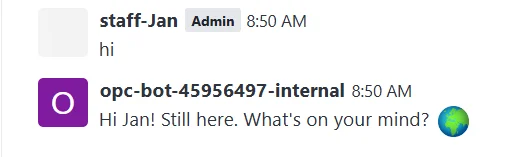
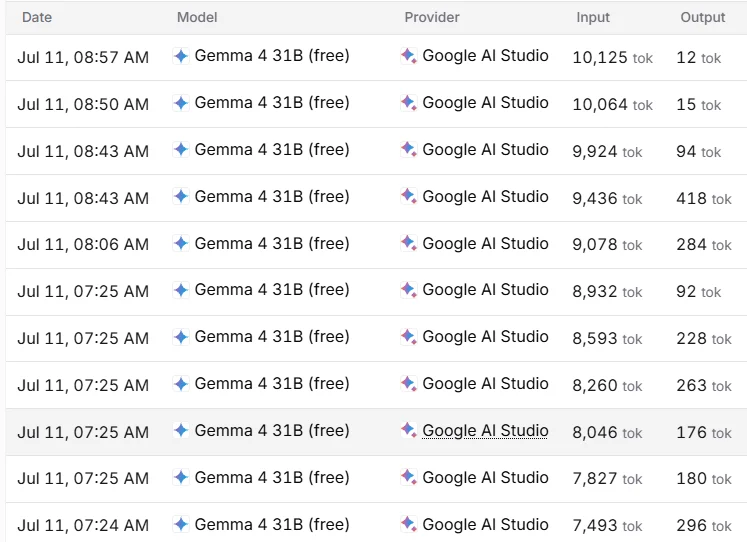
    Simply say a “hi” in openclaw, and burn you 10,064 tokens

    Openclaw How many token is used to simply say a hi 01
    Simply say a "Hi" in Openclaw
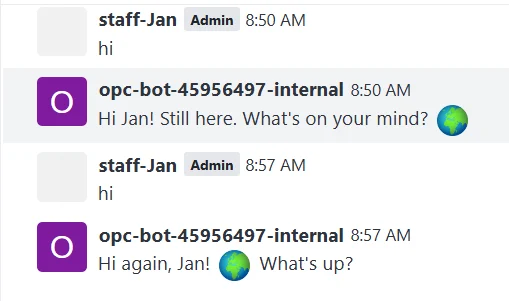
    Openclaw How many token is used to simply say a hi second time
    Say "Hi" again second time in Openclaw
    Openclaw How many token is used to simply say a hi result
    10,064 Tokens are consumed
    opclaw Token Inflation in Openclaw
    Token Inflation